On World Press Freedom Day, a Global Reminder That Journalism Remains Under Siege
As the United Nations and UNESCO prepare to convene journalists and advocates in Zambia, May 3 offers both a celebration of free expression and a sobering reflection on the risks still faced by reporters around the world
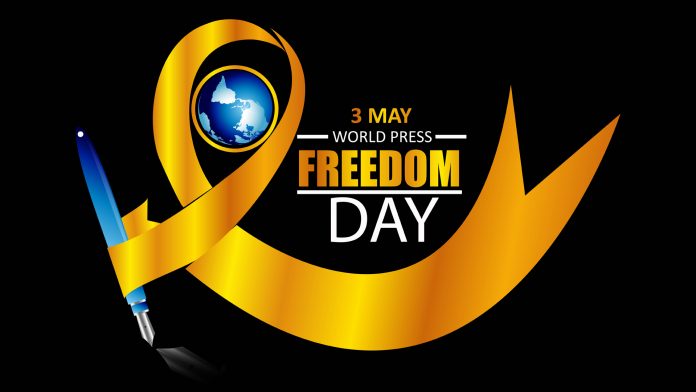
Author’s note. I have been a journalist for 25+ years and World Press Freedom Day is a very important day which honors those who risk their lives on a daily basis, and have given their lives to expose the darkest side of man. Logo: Credit NewsPanama
MARCH 4, 2026: NEW YORK, NY — Every year on May 3, the world pauses — if only briefly — to recognize a principle that lies at the heart of democratic life: the freedom of the press.
Known as World Press Freedom Day, the international observance was proclaimed by the United Nations General Assembly in 1993 to celebrate the fundamental principles of press freedom, evaluate its condition worldwide and honor journalists who have lost their lives in pursuit of the truth.
But the day is not merely ceremonial. It is, by design, a reminder — sometimes an uncomfortable one — directed squarely at governments.
“3 May acts as a reminder to governments of the need to respect their commitment to press freedom,” according to UNESCO, the United Nations agency that leads the annual commemoration. The day also serves as “a day of reflection among media professionals about issues of press freedom and professional ethics,” as well as a moment of solidarity for journalists working under censorship or threat.
Just as importantly, it is a day of remembrance.
Across decades of conflict zones, authoritarian regimes and criminal investigations, journalists have been killed for pursuing stories that powerful interests wanted buried. World Press Freedom Day stands as an annual acknowledgment of those sacrifices — a reminder that journalism, in many parts of the world, remains a dangerous profession.
A Global Gathering in Zambia
This year’s official commemoration will extend beyond the symbolic date.
On May 4 and 5, media leaders, policymakers and digital rights advocates will gather in Lusaka, Zambia, for the World Press Freedom Day 2026 Global Conference, hosted by UNESCO and the Government of Zambia.
Click on the above paragraph which will bring you to a draft at “Shaping a Future at Peace.”
Organizers describe the event as a critical moment to reaffirm freedom of expression as both a fundamental human right and a practical tool for building more resilient societies.
The gathering will bring together journalists, technologists, policymakers, civil society groups and academics to address the increasingly complex relationship between journalism, technology and democratic governance. In the digital era, the boundaries between newsrooms, social platforms and civic spaces have become intertwined, raising new questions about misinformation, artificial intelligence and the safety of reporters working online.
The conference will also be held in conjunction with RightsCon 2026, a major international forum focused on digital rights and internet governance, underscoring the growing overlap between press freedom and broader debates about online speech and access to information.
A Right Under Pressure
The annual observance arrives at a moment when the global media landscape is undergoing rapid and often troubling change.
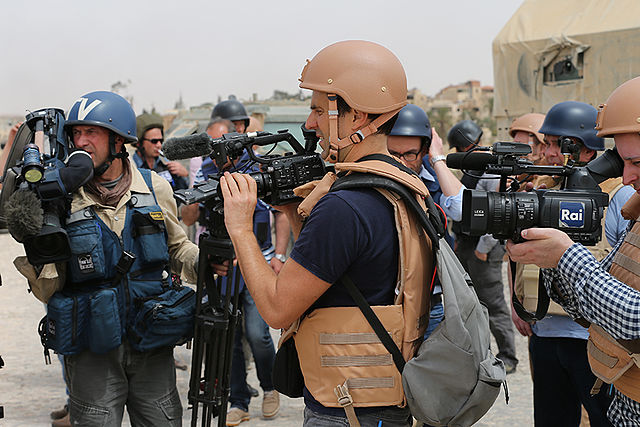
From war zones in Eastern Europe and the Middle East to the tightening grip of authoritarian governments in parts of Asia and Africa, journalists continue to face intimidation, detention and violence. Even in established democracies, political polarization and declining trust in media institutions have complicated the role of the press.
At the same time, technological disruption has reshaped the way information is produced and consumed. Artificial intelligence, algorithm-driven news distribution and the explosion of digital disinformation have forced news organizations to rethink both their business models and their editorial practices.
For UNESCO and the United Nations, these pressures reinforce the importance of maintaining strong protections for freedom of expression, which is enshrined in Article 19 of the Universal Declaration of Human Rights.
The agency’s recent reports on global trends in freedom of expression have emphasized that independent journalism remains a cornerstone of democratic governance and a key component of the United Nations’ Sustainable Development Goal 16, which promotes peace, justice and strong institutions.
Remembering the Fallen
While conferences and panel discussions dominate the official program, World Press Freedom Day retains a more solemn dimension.
Across newsrooms, press organizations and universities around the world, the day is often marked by memorials honoring journalists killed while reporting — from war correspondents on front lines to investigative reporters exposing corruption and organized crime.
Each year UNESCO also awards the Guillermo Cano World Press Freedom Prize, named for the Colombian newspaper editor who was assassinated in 1986 after his reporting on drug cartels angered powerful criminal networks.
The award recognizes individuals or organizations that have made significant contributions to defending or promoting press freedom, often at great personal risk.
The Future of a Fragile Freedom
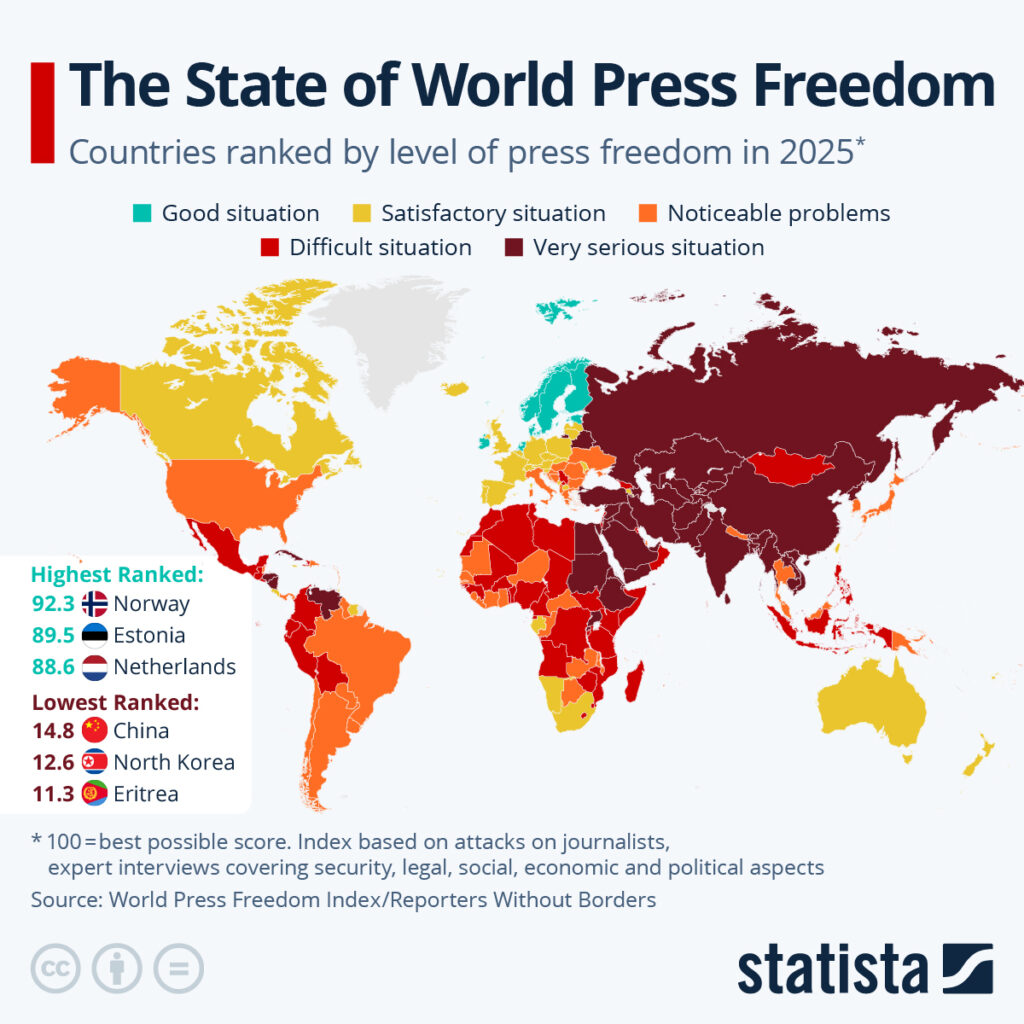
In theory, the principle of a free press is widely accepted. Nearly every nation formally guarantees freedom of expression in its constitution or legal framework.
In practice, the gap between principle and reality remains wide.
For journalists, World Press Freedom Day is both affirmation and warning — a moment to celebrate the enduring value of independent reporting, and to confront the forces that continue to threaten it.
The message behind the observance is ultimately simple: a society that cannot tolerate a free press cannot long sustain a free people.
And so, each year, on May 3, the world is reminded that the freedom to report the truth is never fully secure — it must be defended again and again, wherever the next story leads.