Holland America Turns Up the Volume: The Great American Bandstand Goes to Sea
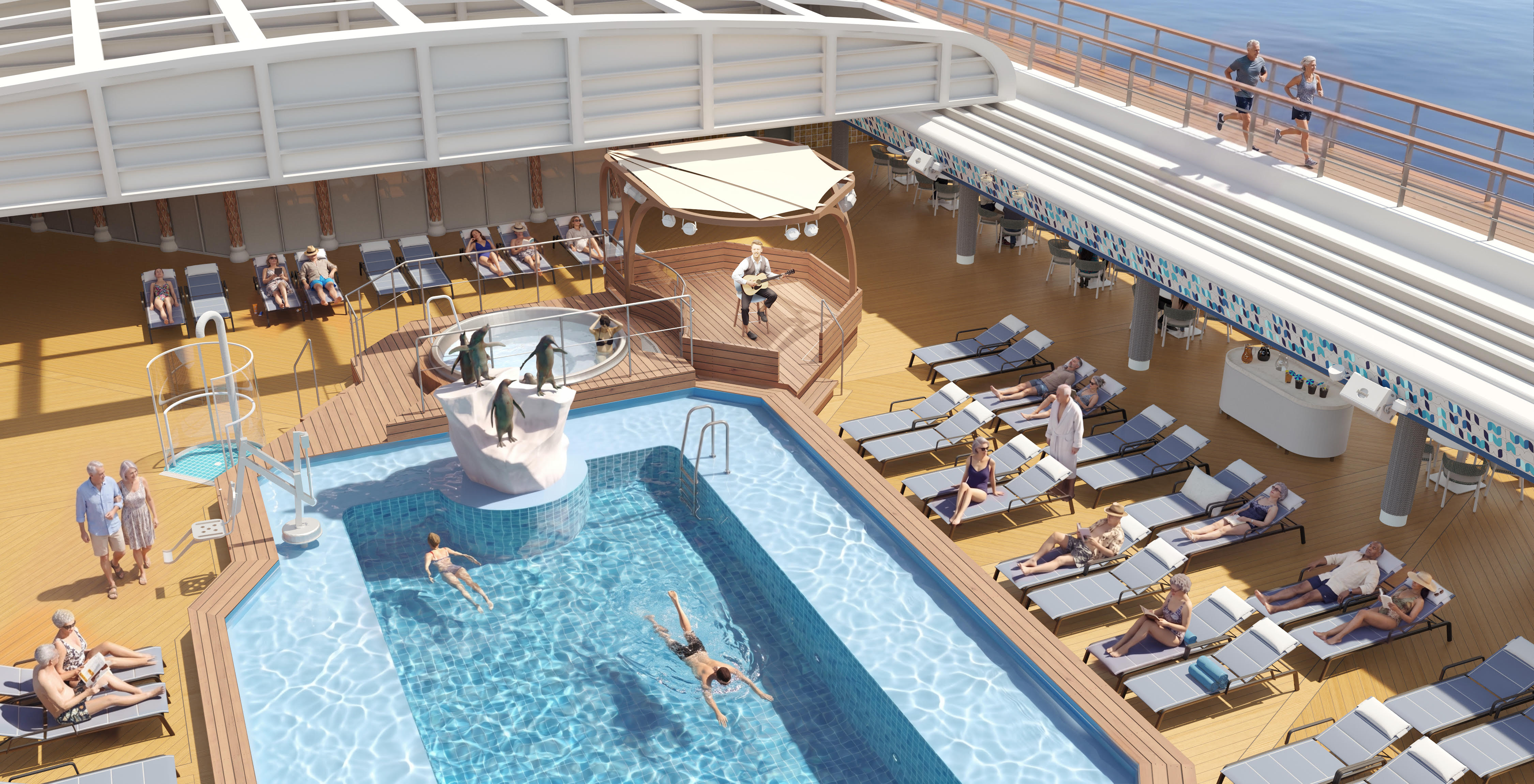
New poolside stages aboard Oosterdam and Zuiderdam will put live music at the center of the day — another reason Holland America’s premium, midsize ships are increasingly compelling in an era of floating megacities.
By Liam P. Cusack, Managing Editor
SEATTLE, WA: AUG 25, 2026 — There is a moment at the beginning of almost every great cruise when the vacation seems to officially begin.
The lines are cast off. Tugboats fall away. The terminal slowly recedes into the distance. Champagne glasses appear. Passengers drift toward the rail, and the open sea replaces the city skyline.
On Holland America Line, that moment is about to get its own soundtrack.
Holland America Line is bringing permanent live-music bandstands to the Lido Pool aboard Oosterdam and Zuiderdam, transforming one of the most naturally social spaces aboard each ship into a genuine entertainment venue.
Think less swimming-pool stage and more seaside bandstand — except the seaside happens to move.
A guitarist might settle into an acoustic set while passengers linger over lunch. A pianist or small ensemble could provide the soundtrack to a leisurely afternoon beneath the Lido Pool’s retractable glass roof. Then, as the sun drops toward the horizon and the ship slips away from Barcelona, Fort Lauderdale or a Caribbean island, the tempo can rise: drums, guitars, vocals and a full live band turning sailaway from something passengers watch into something they participate in.
Holland America says programming will deliberately change with the rhythm of the day, ranging from relaxed solo performances to higher-energy bands, multi-instrument shows and even classical performances. The company’s Aug. 24 announcement described rotating styles and genres, with acoustic music during quieter periods and more energetic performances as afternoon gives way to evening.
It is a deceptively simple idea, and a very good one.
A Swimming Pool Becomes a Town Square
Cruise lines have spent much of the past decade trying to outdo one another with attractions that would have seemed impossible at sea a generation ago: roller coasters, water parks, race tracks, virtual-reality attractions and amusement areas large enough to consume several decks.
Holland America is making a different wager.
Sometimes what passengers really want is a good band, a comfortable chair, a cold drink and somewhere pleasant to enjoy all three.
The Lido Pool is already the daytime heart of both Oosterdam and Zuiderdam. Passengers swim there, eat there, read there, meet friends there and inevitably find themselves staring through the windows at whichever patch of the world is passing outside. With its retractable glass roof, the space works whether the ship is basking beneath a Caribbean sun, threading its way through a cool Norwegian fjord or sailing through the drizzle of a North Atlantic afternoon.
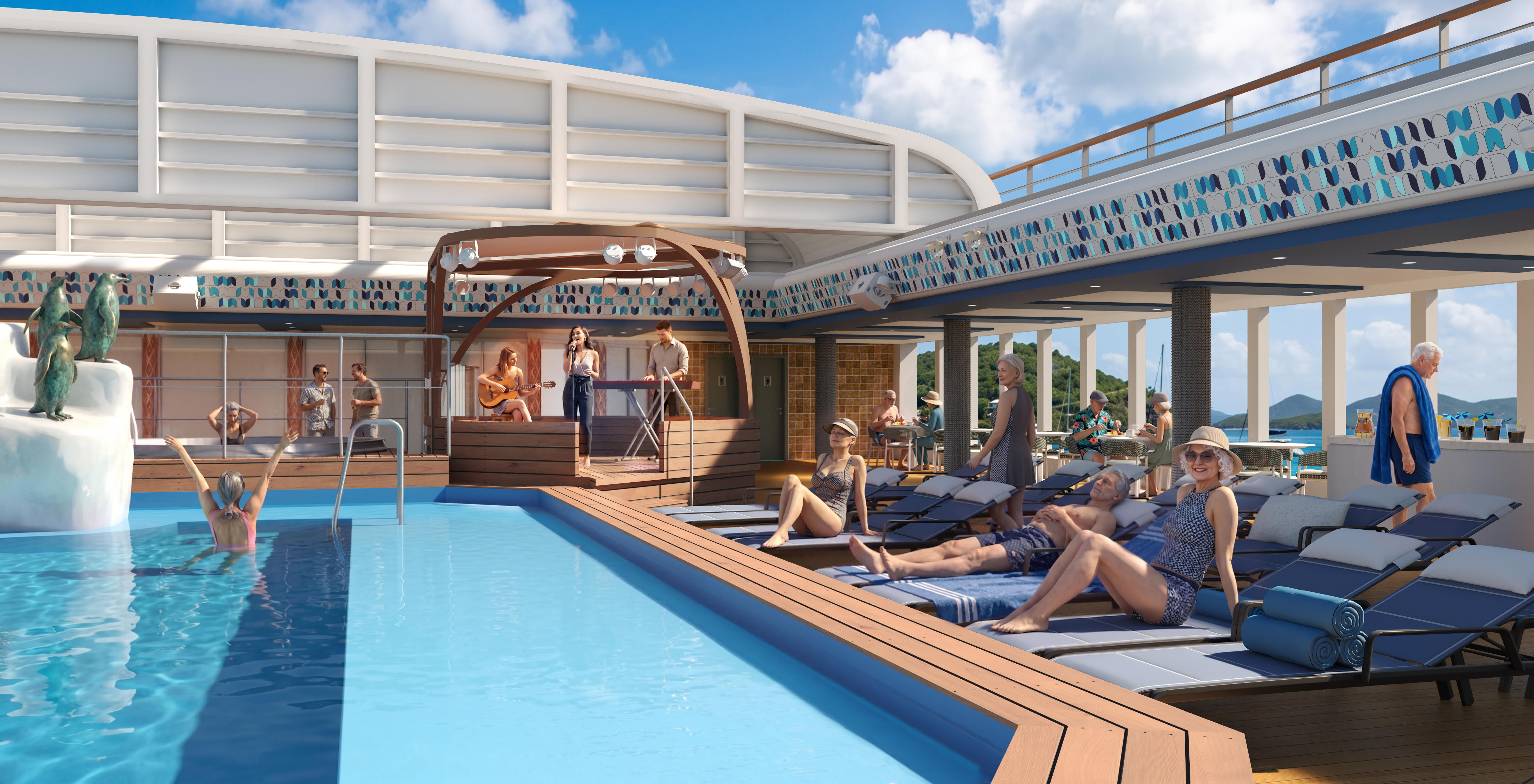
Now add music.
Picture an acoustic guitar carrying softly across the pool on a sea day. Later, perhaps, a vocalist steps onto the stage. By sailaway, the musicians have multiplied, the drummer has arrived and passengers who had planned to stay for one drink are ordering another.
It changes the emotional geography of a ship.
Entertainment no longer begins when passengers enter a theater after dinner. It finds them.
The bandstand becomes a meeting place: somewhere to rendezvous before dinner, dance after a day ashore or simply stay longer than intended because the band has just started another song.
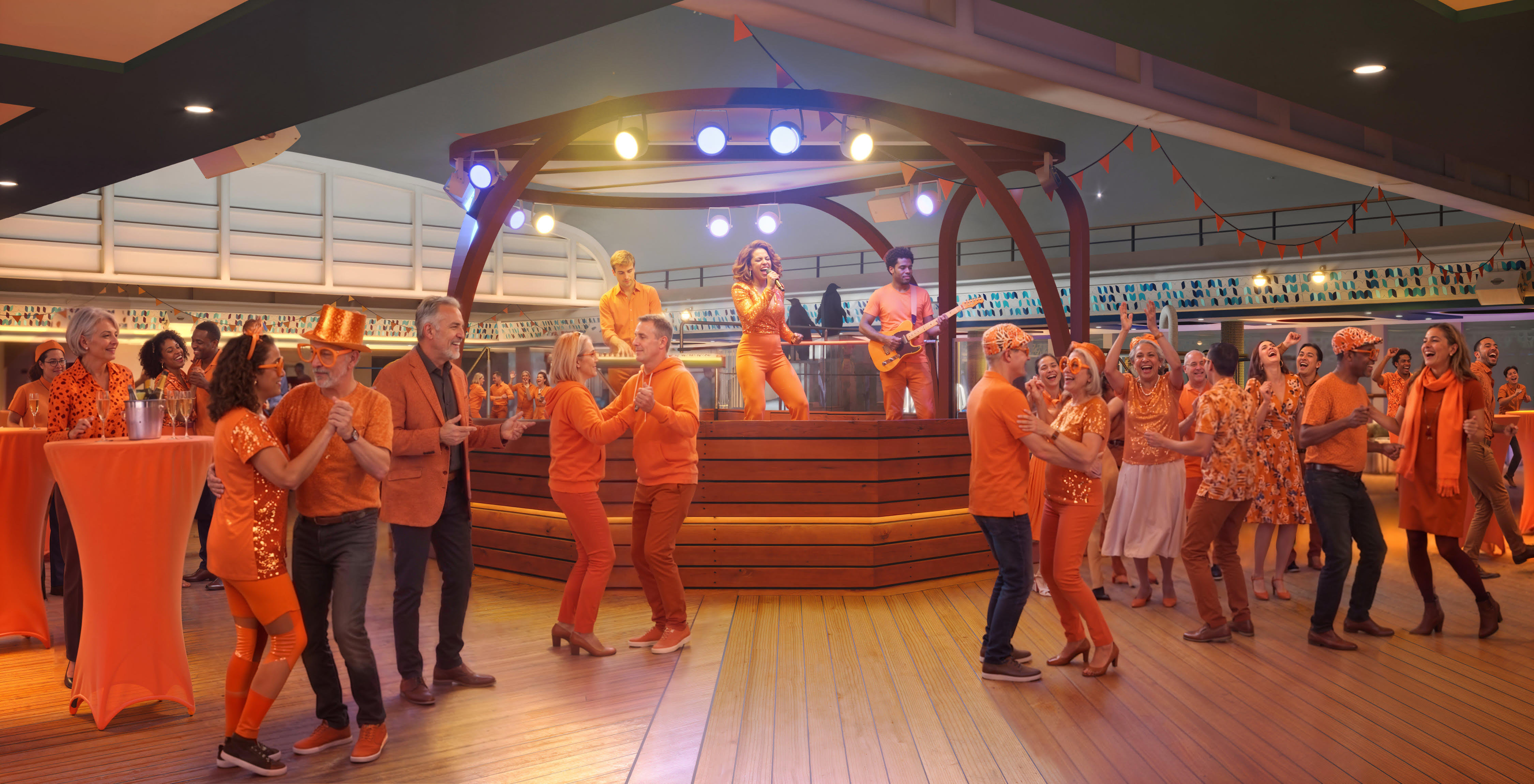
And on Orange Party night, things could become considerably livelier.
Holland America’s signature celebration of its Dutch heritage traditionally sends passengers rummaging through suitcases for anything orange. There are cocktails, dancing, music and an atmosphere that can occasionally resemble the aftermath of a particularly enthusiastic Dutch national holiday.
With a dedicated bandstand, the Lido Pool can become something approaching an open-air festival at sea — orange shirts and dresses swirling around the deck, a live band onstage and the ocean itself providing the scenery. Holland America says the new stages will specifically support Orange Party programming and other celebrations.
Holland America’s Musical DNA
The bandstands also make sense because music is not an afterthought aboard Holland America ships. It has become part of the company’s identity.
Over the years, the line has developed a broad live-entertainment program that includes the Rolling Stone Lounge, Billboard Onboard, World Stage productions, classical musicians and a growing collection of guest entertainers and pop-up performances.
The concept is wonderfully democratic: hear one kind of music, walk a short distance and hear something completely different.
The evening might begin with familiar songs at Billboard Onboard, continue with rock, pop and country favorites in Rolling Stone Lounge and end with a full theatrical production in the World Stage. Holland America has also added the Dam Band, a live group accompanying production shows and guest entertainers, and Vivace string ensembles aboard selected ships.
Its broader entertainment overhaul has included regional performers as well, with programming such as folk guitar in Alaska, steel pan in the Caribbean and mariachi music in Mexico — a clever way to allow the destination to follow passengers back onto the ship.
The poolside bandstands extend that musical philosophy into the daylight hours.
Music no longer waits for 8 p.m.
Premium Cruising Without the Population of a Small City
There is another reason these new venues may work particularly well on Oosterdam and Zuiderdam: Holland America has resisted the industry’s relentless march toward enormous ships carrying enormous populations.
That may be one of the strongest arguments for booking the line.
Holland America occupies an increasingly attractive position in the cruise market: it offers a decidedly premium travel product aboard ships that are, by contemporary standards, remarkably manageable in size.
Oosterdam and Zuiderdam are Vista-class sister ships measuring roughly 82,000 gross tons and 936 feet long. Each has traditionally accommodated about 1,964 passengers.
Put that into perspective.
Celebrity Cruises’ Celebrity Beyond, another premium-market ship, accommodates roughly 3,260 guests, while Princess Cruises’ newer Sun Princess and Star Princess each accommodate 4,300 passengers at lower-berth occupancy.
That means a traveler aboard Oosterdam or Zuiderdam can be sharing the ship with roughly 1,300 fewer passengers than aboard Celebrity Beyond and more than 2,300 fewer than aboard Sun Princess or Star Princess.
Those are not insignificant numbers when everybody decides to have breakfast at approximately the same time.
And smaller does not mean stripped down.
These are proper premium cruise ships with multiple restaurants and bars, swimming pools, spas, sophisticated entertainment spaces, substantial theaters, comfortable lounges and a wide range of accommodations. What they generally do not have is the population density of the industry’s newest giants.
There is space to breathe.
One learns the ship quickly. The bartender who made your martini on Tuesday may remember you on Thursday. Passengers encountered at breakfast become familiar faces at the theater. Getting from a restaurant to a show does not require an expedition across what feels like three ZIP codes.
The staffing remains substantial as well: Oosterdam has been listed with about 812 crew for 1,964 passengers, or roughly 2.4 passengers per crew member. More important in day-to-day terms, fewer guests are competing for the same bartenders, tables, deck chairs and entertainment spaces.
That combination — premium service, midsize ships and comparatively modest passenger counts — produces something increasingly precious at sea: intimacy.
Dining rooms feel like dining rooms rather than convention halls. Bars can feel convivial rather than mobbed. Entertainment venues tend to retain a sense of occasion instead of becoming crowd-control exercises.
And a poolside bandstand benefits enormously from that scale.
Two thousand passengers gathering around a central space can create energy. Four thousand or 5,000 can create traffic.
Holland America understands the difference.
Evolution Without Erasing the Ship
The bandstands are part of something much larger.
Holland America Evolution is a more than $500 million multiyear modernization of six Vista- and Signature-class ships — the largest fleet-renewal program in the company’s 153-year history.
The ambition is not merely to refurbish older vessels. Holland America is taking successful ideas from its newer Pinnacle-class ships and carefully transplanting them to established ships without destroying the character and proportions that made those vessels popular in the first place.
That is a harder trick than it sounds.
Cruise passengers want new restaurants, contemporary cabins, better technology and updated entertainment. They do not necessarily want the ship they love transformed into something unrecognizable.
Oosterdam will be the first ship to emerge from the Evolution program, returning to service in December 2027. The transformation includes additional accommodations, Solo Verandah staterooms, new Bridgeview Suites, a reimagined Pinnacle Suite and the arrival of the Grand Dutch Café, the Amsterdam-inspired gathering place already popular aboard Holland America’s Pinnacle-class ships.
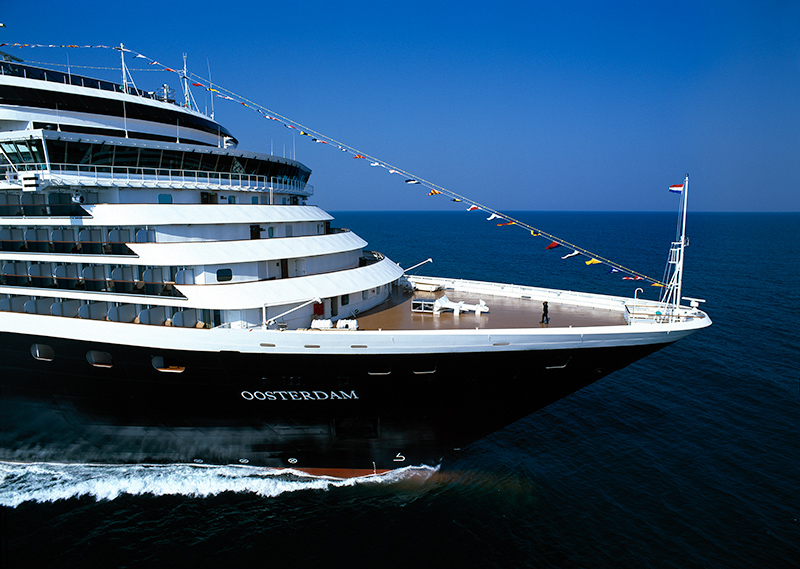
Zuiderdam follows, with its post-Evolution debut scheduled for April 2, 2028. It will gain new Solo Verandahs, Vista Suites, Bridgeview Suites and a redesigned Pinnacle Suite, along with what Holland America says will be the largest Grand Dutch Café introduced through the Evolution program.
Yet among hundreds of millions of dollars in renovations, the humble bandstand may become one of the changes passengers notice most.
Sometimes the Best Attraction Is a Great Band
Cruising has always been partly about spectacle.
The ships themselves are spectacles.
But some of the most memorable moments at sea are remarkably uncomplicated: hearing a pianist while having a drink, discovering a singer you did not expect to enjoy, dancing with someone you love or watching a band play as a city disappears behind the stern.
That is what makes Holland America’s decision interesting.
The company is not simply installing another piece of entertainment infrastructure. It is giving live musicians a prominent place in one of the most beautiful venues available on any cruise ship: a room whose ceiling opens to the sky and whose scenery changes every day.
One afternoon the backdrop might be Santorini. Another, Glacier Bay. Another, the palms of Curaçao. Another, nothing but several hundred miles of Atlantic blue.
There is no LED wall capable of competing with that.
When the reimagined Oosterdam finally slips away from the pier with passengers gathered around the Lido Pool, drinks in hand and a band playing beneath the open roof, Holland America may have found precisely the right kind of cruise-ship innovation.
Not bigger.
Not louder for the sake of being louder.
Just more musical, more social and — on a premium ship carrying fewer than 2,000 passengers — pleasantly human in scale.
Sometimes the best new attraction at sea is simply giving people another reason to come together.